

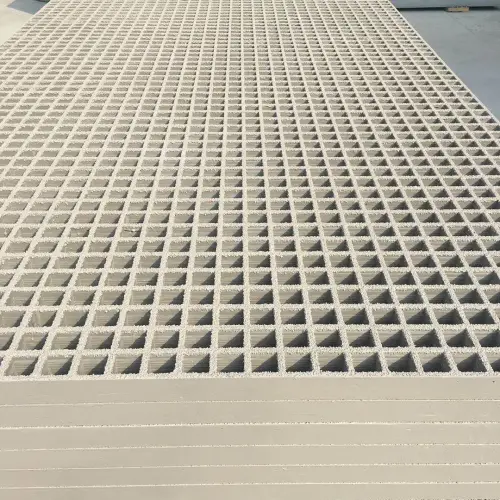
FRP Composite Grating Panel 1220x2440x100
In the context of a rapidly evolving construction and industrial landscape, the demand for advanced materials that offer high durability, safety, and environmental friendliness has become more urgent than ever. FRP composite grating, particularly the FRP Composite Grating 1220x2440x100, has emerged as a breakthrough solution, meeting a wide range of rigorous requirements across various applications. With its superior advantages over traditional materials, this product is steadily asserting its position as the premier choice for modern construction projects
What is Grating? Understanding Its Structure and Applications
To better understand FRP Composite Grating, we must first define the concept of "grating." In technical terms, grating (also known as grid flooring or mesh flooring) is a structural framework consisting of metal bars, composite plastics, or other materials woven or welded together in a regular grid pattern with open spaces. This structure offers several key benefits:
-
Weight Optimization: The open space between bars significantly reduces overall weight compared to solid flooring while maintaining the necessary load-bearing capacity.
-
Ventilation and Drainage: The mesh design allows for free air circulation. Water, oil, and chemicals can easily drain through, preventing accumulation, slippery surfaces, and corrosion.
-
High Load Capacity: Depending on the material and design, grating can support heavy loads, making it suitable for high-traffic areas or heavy equipment placement.
-
Easy Installation and Maintenance: The panelized or modular structure ensures rapid installation and provides convenient access for cleaning and repairs.
-
Safety: Grating surfaces are often designed with anti-slip properties to ensure the safety of workers and operators.
Grating can be manufactured from various materials, including carbon steel, stainless steel, aluminum, and particularly Fiberglass Reinforced Plastic (FRP). Each material possesses unique characteristics suited for specific applications.
FRP Composite Grating: A Material Revolution
In the world of composite materials, FRP (Fiberglass Reinforced Plastic) grating stands out for its superior properties, overcoming many limitations of traditional materials. FRP is a synthetic material composed of thermosetting resins (such as polyester, vinyl ester, or epoxy) reinforced with glass fibers. This combination creates a material with an exceptionally high strength-to-weight ratio, outstanding durability, and excellent corrosion resistance.
What is FRP Composite Grating?
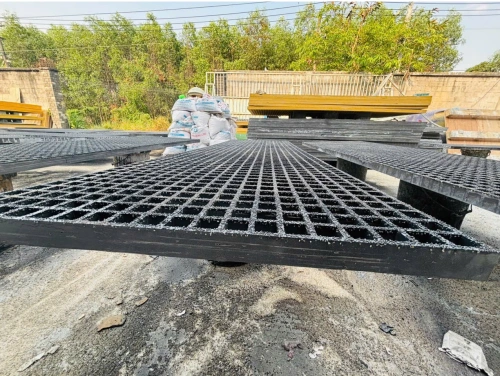
FRP composite grating is a mesh flooring produced from fiberglass-reinforced composite materials. It is primarily manufactured using two methods:
-
Molded Grating: Produced by pouring a resin and fiberglass mixture into a pre-set mold to create a seamless mesh structure. It offers a bidirectional load-bearing capacity and can be formed into complex shapes.
-
Pultruded Grating: Created by pulling fiberglass bundles saturated with resin through a heated die. This method produces high-strength bars in a specific direction, making it ideal for applications requiring heavy unidirectional load capacity.
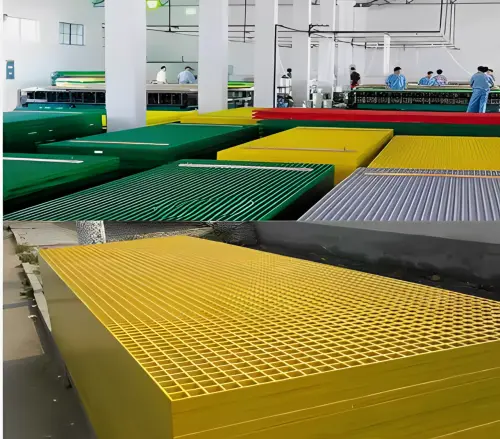
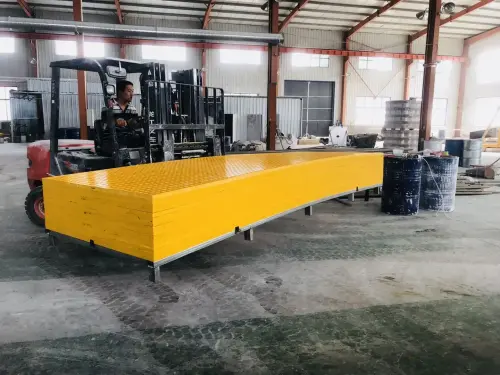
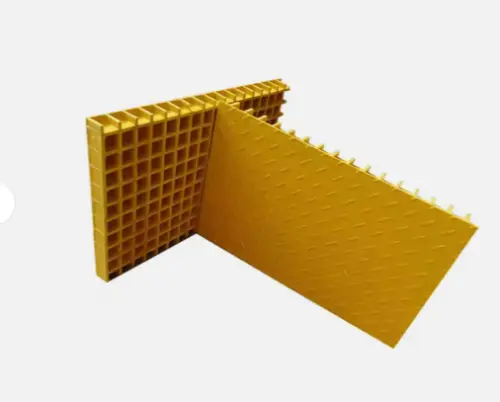
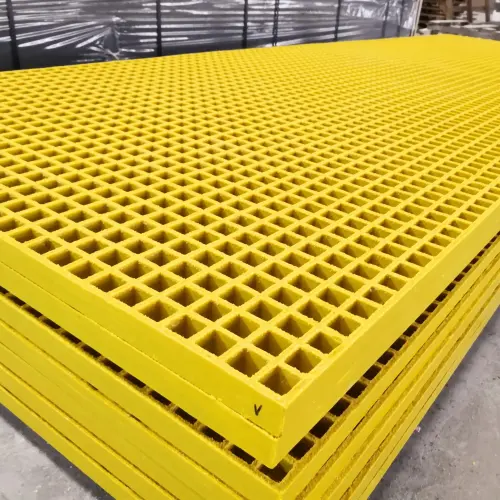
The FRP Composite Grating Panel (1220x2440x100mm) belongs to the molded grating group, featuring standard dimensions and a 100mm thickness that provides an ideal balance between strength, weight, and cost.
Outstanding Features of FRP Composite Grating
-
Chemical Corrosion Resistance: One of the most significant advantages of FRP. It resists corrosion from acids, alkalis, salts, and various chemicals—environments where traditional metals fail.
-
Rustproof: Unlike metal, FRP does not oxidize or rust, even in humid environments or when exposed to seawater.
-
High Strength-to-Weight Ratio: FRP is significantly lighter than steel but offers equivalent or higher strength, reducing structural loads and simplifying transportation.
-
Electrical Insulation: As a non-conductive material, FRP is vital for safety in power plants, substations, or areas with complex electrical systems.
-
Fire Retardancy: While plastic-based, FRP grating can be formulated with additives to meet specific fire safety standards.
-
Anti-Slip: Surfaces are available in concave, grit, or diamond finishes to maximize traction and safety.
-
Long Lifespan: With its resistance to environmental factors, FRP grating often lasts 25 years or more.
Technical Specifications (Standard 1220x2440x100mm)
-
Dimensions: 1220mm x 2440mm (Width x Length)
-
Thickness: 100mm
-
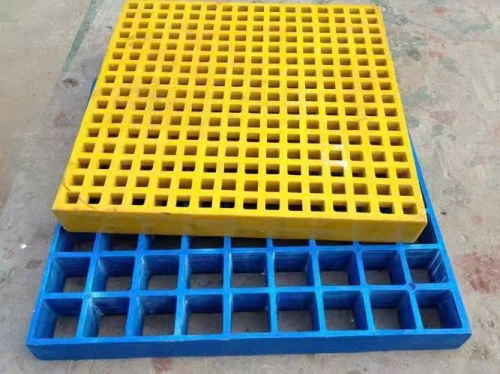
Colors: Grey, Yellow, Green, Orange, Red (customizable for safety zones).
-
Mesh Size: Common options include 38x38 mm or 50x50 mm.
-
Surface Finishes:
-
Concave: Enhanced initial grip.
-
Grit/Quartz-coated: Superior anti-slip for wet and oily areas.
-
Flat: For aesthetic applications or where a smoother surface is required.
-
Common Applications
1. Heavy Industry
-
Chemical & Petrochemical Plants: Withstands harsh acids and alkalis.
-
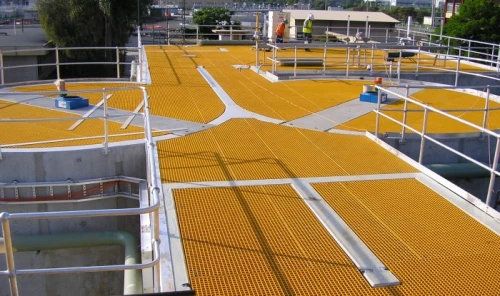
Wastewater Treatment: Resistant to waste products and easy to clean.
-
Power Plants: Provides electrical insulation and heat resistance.
-
Food & Beverage: Hygienic, corrosion-resistant against cleaning agents.
2. Livestock & Agriculture
-
Animal Flooring (Pig/Poultry Farms): Resistant to animal waste, easy to drain, and reduces pathogens by keeping the environment dry.
3. Infrastructure & Marine
-
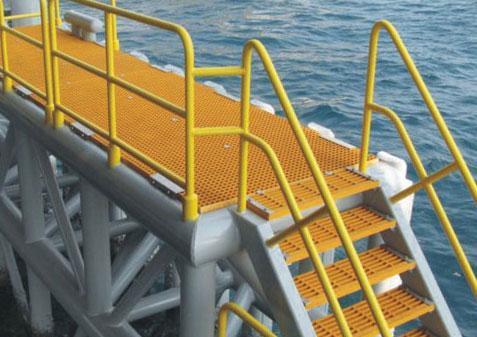
Docks & Piers: Resists saltwater corrosion and provides anti-slip safety.
-
Walkways & Manhole Covers: A lightweight, rustproof alternative to metal.
-
Public Parks & Pools: Safe for barefoot traffic and resistant to pool chemicals.
Installation and Maintenance Guidelines
-
Preparation: Check panels for transport damage. Use specialized composite cutting tools (diamond blades) in well-ventilated areas. Wear PPE (goggles, gloves, dust masks).
-
Installation: Place panels on a support frame (steel, concrete, or composite). Ensure they are flush and aligned.
-
Fixing: Use specialized clipping systems (M-clips, L-clips). Fasteners should be Stainless Steel (SS304 or SS316) to prevent corrosion. Typically, clips should be placed every 15-30 cm along the edges.
-
Maintenance: Clean periodically with water and mild detergent. Regularly inspect clips and fasteners for stability.
Conclusion
The FRP Composite Grating Panel 1220 x 2440 x 100mm is an advanced material solution offering superior durability, safety, and cost-effectiveness. Whether for heavy industry, livestock, or public infrastructure, choosing the right FRP product ensures a sustainable, modern, and safe construction project.
Products khác
FRP Composite Grating Panel, 1220x2440x38mm