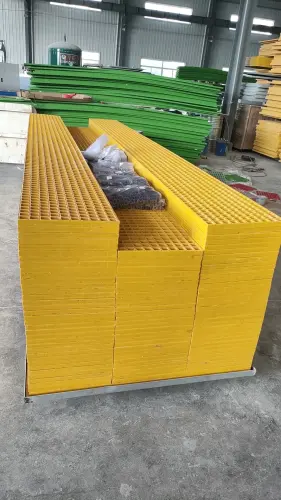


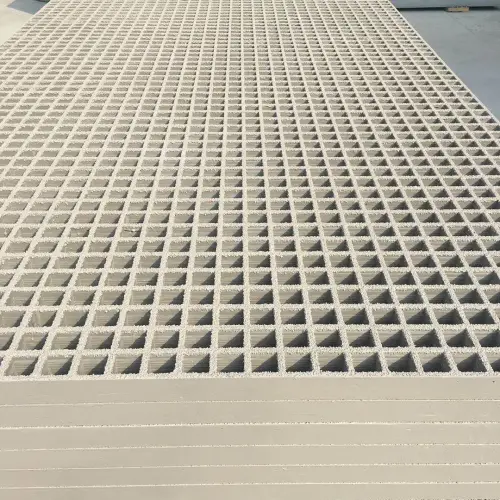
FRP Composite Grating Panel 1220x4110x38mm
Features, Applications, and Installation Guide
With the continuous advancement of the construction and industrial sectors, the demand for high-durability, safe, and environmentally sustainable materials has become more critical than ever. FRP (Fiberglass Reinforced Plastic) Composite Grating, particularly the 1220x4110x38mm specification, has emerged as a breakthrough solution engineered to meet stringent technical requirements across diverse industries. Offering distinct advantages over traditional materials, this product is firmly establishing itself as the premier choice for modern, high-performance infrastructure.
What is Grating? Understanding Structure and Functionality
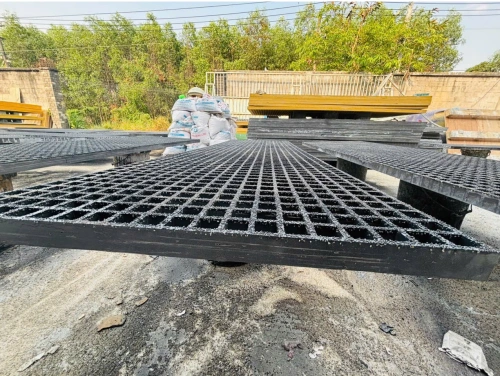
To better understand FRP composite grating, it is first essential to clarify what "grating" means. In structural and industrial engineering, grating (also referred to as mesh flooring or open-grid flooring) is a structural framework composed of parallel or crossed bars. These bars, made of metal, plastics, or composite materials, are interconnected or welded at regular intervals to form an open, uniform grid pattern.
This specific design framework offers several core operational benefits:
-
Weight Optimization: The open spaces between the bars significantly reduce the total structural weight compared to solid flooring slabbing, while successfully maintaining the necessary load-bearing capacity.
-
Ventilation and Drainage: The grid structure allows for unrestricted airflow. Water, oils, and process chemicals drain effortlessly, preventing fluid accumulation, slippery surfaces, and localized corrosion.
-
High Load Capacity: Depending on the material composition and engineering design, grating can support substantial weight loads, making it ideal for high-traffic pedestrian zones or heavy machinery placement.
-
Efficient Installation and Maintenance: The modular panel design facilitates rapid, straightforward installation and offers convenient access for routine cleaning, inspection, and repairs.
-
Enhanced Safety: Grating surfaces are typically engineered with specialized anti-slip profiles, ensuring maximum safety for personnel and operational traffic.
Grating is manufactured from a wide variety of materials, including carbon steel, stainless steel, aluminum, and notably, Fiberglass Reinforced Plastic (FRP). Each material configuration serves distinct environmental and structural requirements.
FRP Composite Grating: A Material Revolution
Within the field of advanced material science, FRP composite grating stands out by successfully overcoming the physical limitations of traditional metallic floorings. FRP is a structural composite consisting of a thermosetting polymer resin matrix (such as polyester, vinyl ester, or epoxy) reinforced with continuous glass fibers. This engineered combination yields a material with an exceptionally high strength-to-weight ratio, superior structural durability, and outstanding chemical resistance.
What is an FRP Composite Grating Panel?
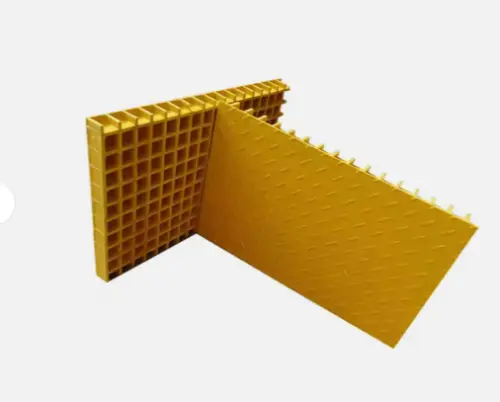
FRP composite grating is an open-grid flooring system manufactured from fiberglass-reinforced materials. These panels are produced using two primary manufacturing methodologies:
-
Molded Grating: Manufactured by layering continuous liquid resin and fiberglass strands in an open mold system to create a monolithic, bidirectional grid structure. This method delivers excellent multi-directional strength and allows for complex geometric configurations.
-
Pultruded Grating: Formed by pulling continuous fiberglass rovings through a liquid resin bath and a heated steel shaping die. This automated process creates structural bars with extreme unidirectional strength, making it ideal for applications requiring substantial longitudinal load support.
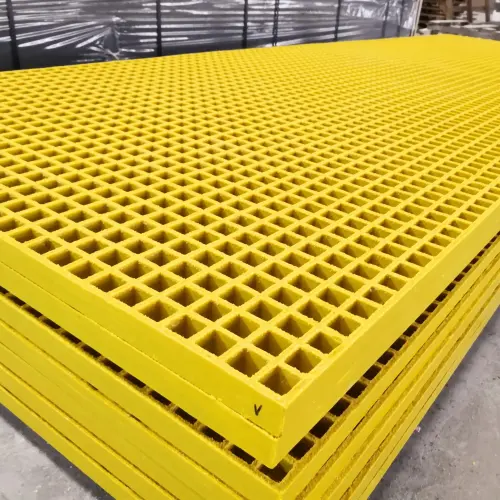
The FRP Composite Grating Panel (1220x4110x38mm) belongs to the molded grating category. Note that while the overall dimensions are $1220 \times 4110\text{ mm}$ with a robust 38mm thickness for superior heavy-duty load capacity, certain standard production lines may scale thickness configurations ($20\text{ mm}$ to $38\text{ mm}$) to balance load parameters against dead weight and cost constraints.
Key Technical Attributes of FRP Composite Grating
-
Chemical Corrosion Resistance: One of the most significant advantages of FRP is its complete immunity to chemical attack. It withstands acids, alkalis, salts, and aggressive chemical compounds that would rapidly degrade traditional metals—making it ideal for chemical processing and wastewater environments.
-
Rust and Oxidation Proof: Unlike ferrous metals, FRP does not rust or oxidize, even when permanently subjected to high humidity, moisture, or direct marine saltwater exposure. This ensures an extended service life and minimizes maintenance overheads.
-
High Strength-to-Weight Ratio: FRP is substantially lighter than structural steel while delivering comparable or superior structural strength. This reduces the dead load on supporting frameworks, simplifies transit, and lowers installation costs.
-
Electrical Insulation: FRP is completely non-conductive. This non-sparking, dielectric property is vital in high-voltage zones, power generation facilities, substations, and areas with complex electrical layouts.
-
Fire Retardancy: Engineered with specialized flame-retardant additives, FRP grating panels can be formulated to meet strict international fire safety and self-extinguishing compliance codes.
-
Slip Resistance: The walking surface of FRP panels can be customized with various safety profiles—such as concave (meniscus) surfaces, grit/quartz-coated surfaces, or diamond patterns—to optimize traction and prevent workplace slip-and-fall accidents.
-
Thermal Stability: FRP performs reliably across a broad temperature spectrum, though engineers should verify the continuous operating temperature limits of the specific resin selection (polyester vs. vinyl ester).
-
Low Maintenance and Easy Cleaning: The smooth, non-porous chemical structure allows for effortless sanitization using standard water pressure or mild industrial cleaning agents.
-
Extended Service Life: Thanks to its resistance to environmental aging, UV radiation, and corrosion, FRP grating features a service life that routinely exceeds 25 years, maximizing long-term return on investment (ROI).
-
Rapid Installation: Its lightweight, modular nature enables quick onsite handling and cutting, saving significant labor hours and equipment rental costs.
Technical Specifications: 1220x4110x38mm Panel
The 1220mm x 4110mm configuration with a 38mm thickness represents an industrial-grade standard, delivering an outstanding balance of rigid deflection resistance, structural span capability, and overall cost-efficiency.
Typical Specification Overview
-
Dimensions: $1220\text{ mm} \times 4110\text{ mm}$ (Width x Length)
-
Thickness: $38\text{ mm}$ (Engineered for high-load spans)
-
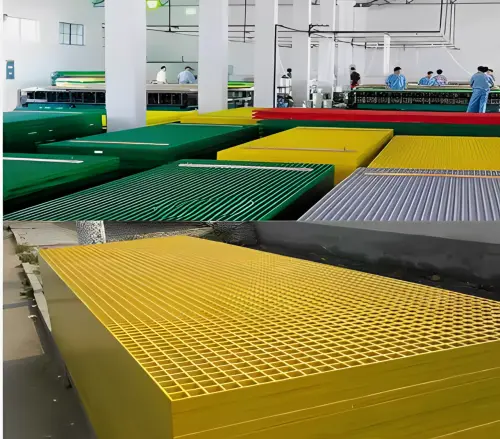
Color Choices: Available in industrial gray, safety yellow, green, orange, or red to comply with corporate safety zoning (e.g., yellow for high-hazard areas).
-
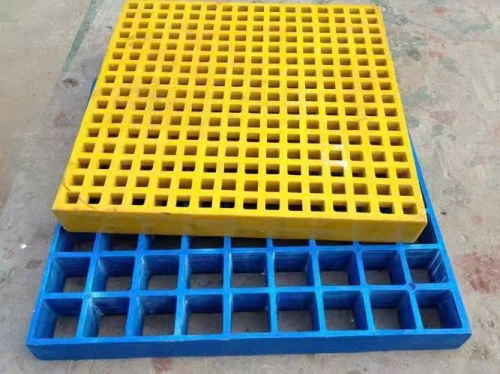
Mesh Size: Standard configurations typically feature $38 \times 38\text{ mm}$ or $40 \times 40\text{ mm}$ open-mesh patterns, optimizing open area drainage against small-object fall protection.
-
Surface Profiles:
-
Concave Surface: Provides excellent built-in, low-maintenance slip resistance.
-
Gritted/Quartz-Coated Surface: Embedded with quartz sand grains for maximum friction, ideal for heavy oil, grease, or marine environment exposure.
-
Smooth/Flat Surface: Suited for architectural applications or areas where raw abrasiveness is undesirable.
-
Common Applications of FRP Composite Grating
1. Heavy Industrial Sectors
-
Chemical Plants: Walkways and flooring exposed to aggressive acid mist and chemical spills.
-
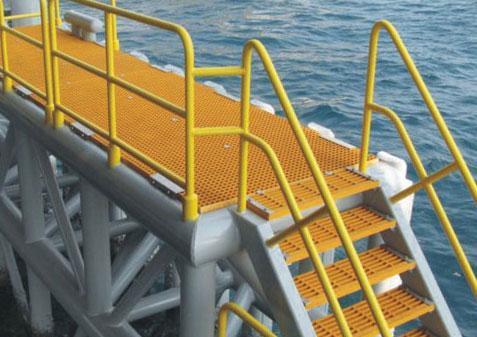
Oil & Gas Refineries: Off-shore and onshore processing platforms subject to extreme weather and petrochemical exposure.
-
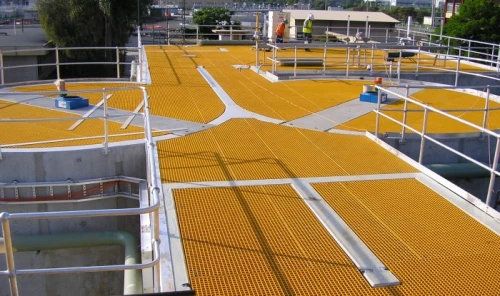
Wastewater Treatment Plants (WWTPs): Non-corrosive trench covers, cat-walks, and structural platforms.
-
Power Plants & Substations: Dielectric flooring around transformers, switchgear, and high-voltage machinery.
-
Food & Beverage Processing: Hygienic, washdown-safe platforms resistant to organic sanitizing acids.
-
Pulp & Paper Mills: Flooring surrounding bleaching and chemical preparation units.
-
Mining Operations: Heavy-duty paths resistant to slurry, mineral salts, and groundwater corrosion.
2. Agricultural and Livestock Sector
-
Livestock Slatted Flooring: Widely applied in modern poultry and swine facilities. FRP resists animal waste corrosion, simplifies waste drop-through, eliminates pathogens, and maintains a clean, dry flooring profile for livestock.
3. Transportation and Municipal Infrastructure
-
Marine Docks & Shipyards: Pier walkways, boat decking, and gangways completely resistant to salt air and wave action.
-
Industrial Warehouses: Durable, chemical-resistant flooring capable of managing pallet jack traffic.
-
Stair Treads: Light, slip-resistant step modules fitted with high-visibility nosing.
-
Trench & Manhole Covers: Lightweight municipal drainage covers that prevent metal-theft and eliminate rust failure.
Installation and Maintenance Guidelines
While installing FRP grating is highly straightforward, adhering to standard engineering protocols is required to preserve structural safety and maximize panel longevity.
1. Pre-Installation Preparation
-
Material Inspection: Verify that all panels arrived free of transit damage.
-
Layout Planning: Draft a detailed layout map identifying structural support spans, required field cuts, and clip anchoring locations.
-
Tooling: Use heavy-duty cutting equipment equipped with diamond-grit or carbide-tipped saw blades. Ensure masonry drill bits are ready for anchoring.
-
Safety PPE: Fiberglass cutting generates fine particulate dust. Personnel must wear safety goggles, heavy-duty gloves, dust masks (N95 or equivalent), and protective work suits.
2. Installation Procedure
-
Measurement and Cutting: Measure twice before executing cuts. Perform all field cutting in well-ventilated areas. Seal any field-cut edges with polyurethane or resin sealants to prevent moisture absorption into exposed glass fibers.
-
Panel Placement: Lay the FRP panels across the prepared structural support framework (steel beams, concrete shoulders, or composite joists). Ensure proper bearing support alignment along all panel edges.
-
Mechanical Fastening: Secure panels using specialized structural clipping systems. These assemblies generally consist of an upper clip (M-Clip, L-Clip, or C-Clip), an underside support bracket, and matching bolt hardware.
-
Hardware Material: Fastening hardware must be composed of Grade 304 or 316 Stainless Steel or compatible composite elements to completely eliminate galvanic corrosion. Use a minimum of 4 clips per panel, placing them roughly every 1.5 to 2 feet along supporting structures.
3. Crucial Operational Safeguards
-
Load Limit Adherence: Never exceed the maximum uniform or concentrated load deflection limits established by the manufacturer's engineering datasheets.
-
Thermal Limits: Monitor surrounding ambient temperatures. Avoid placing the grating in immediate contact with high-heat exhaust pipes or open welding flames that could compromise the resin matrix.
-
Scheduled Inspections: Establish an annual inspection schedule to confirm clip tightness, verify structural framework integrity, and ensure the anti-slip surface remains effective.
Economic and Environmental Benefits
Investing in high-grade 1220x4110x38mm FRP Grating delivers profound economic and ecological advantages over its lifecycle:
-
Minimized Operational Costs: The elimination of sandblasting, repainting, and frequent structural replacements dramatically lowers structural maintenance budgets.
-
Extended Lifecycle ROI: A lifespan crossing several decades ensures that initial capital expenditures are amortized over a far longer period compared to structural steel or timber.
-
Logistical Efficiency: Lower shipping weights yield decreased transport emissions, smaller crane requirements, and safer manual handling on construction sites.
Technical Procurement Checklist
When sourcing industrial composite grating, procurement teams should evaluate the following criteria to ensure optimal project alignment:
-
Resin Formulation: Match the resin type (Orthophthalic Polyester, Isophthalic Polyester, or Vinyl Ester) to the exact chemical exposure level of the site.
-
Structural Load Span: Cross-reference the required support beam spacing against the manufacturer's load-deflection tables for $38\text{ mm}$ thick profiles.
-
Certifications: Ensure compliance with international manufacturing benchmarks (such as ASTM, ISO, or specialized fire safety ratings).
-
Total Cost of Ownership (TCO): Contrast initial quotes against long-term maintenance savings to verify true lifecycle economic value.
Conclusion
The 1220x4110x38mm FRP Composite Grating Panel stands as an elite material solution engineered for the demands of modern heavy industry, civil infrastructure, and commercial construction. By pairing structural rigidity with chemical immunity, electrical insulation, and superior slip safety, it provides an uncompromised asset management solution. Choosing the correct specification from an experienced, certified supplier ensures total operational reliability and structural success for your project applications.
Products khác
FRP Composite Grating Panel, 1220x2440x38mm