

Phenolic FRP Grating: 20 Durable, Chemical-Resistant Solutions
Phenolic FRP grating
When people first encounter Phenolic FRP grating, they often notice the “immediate logic” behind the product: it’s lightweight compared with steel yet engineered for duty-bearing surfaces. Phenolic-based composite grating systems typically rely on a phenolic resin matrix, glass fiber reinforcement, and an engineered panel geometry designed to distribute loads while allowing debris and moisture to pass through. What makes this category especially interesting is not only mechanical performance but also the practical resilience against chemicals, humidity cycles, and weather exposure. From my perspective, the strongest advantage is that Phenolic FRP grating feels like a system rather than just a board: the structure, resin chemistry, and surface design all work together to minimize the failure modes that haunt maintenance managers—rust, corrosion-induced thinning, and surface deterioration that creates slippery or uneven walking conditions.
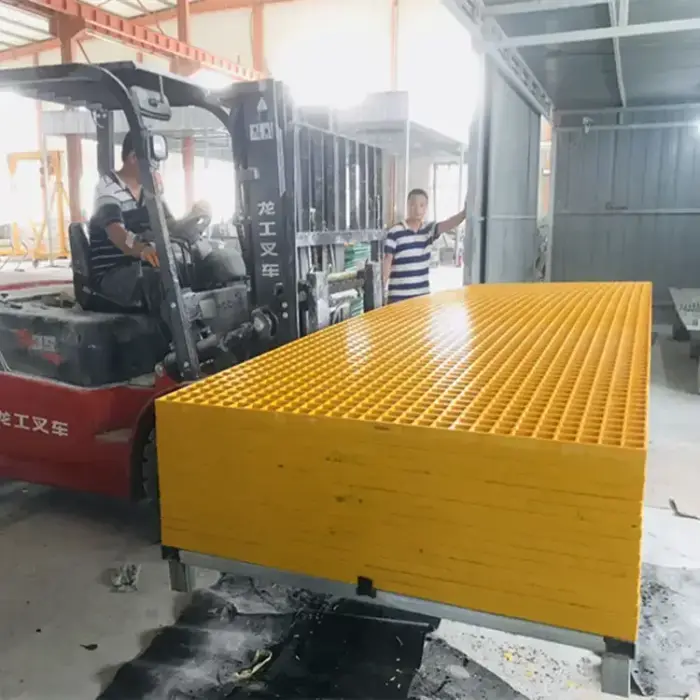
One of the most valuable “real-world” benefits is that phenolic-based composites can be tailored for environments where conventional coatings struggle. Even when metal grating has protective paint, the coating can crack, trap moisture, or wear away at load-bearing points. In contrast, phenolic frp grating is designed with the chemistry in mind. The phenolic resin is known for a stable performance profile in demanding conditions, and that stability translates into predictable inspection outcomes. In facilities that operate continuously—chemical plants, water treatment lines, industrial kitchens, and outdoor infrastructure—predictability is often more important than peak performance claims. You want materials that won’t surprise you after months of exposure.
Another factor worth emphasizing is how grating behaves under repeated use. Most walkways are not “static.” People drag tools, liquids splash, carts pass, and small impacts happen constantly. A well-designed Phenolic FRP grating system tends to offer good surface integrity, and because it’s a composite, it can be made to resist the kinds of surface degradation that occur when thermals and moisture interact with metal. I often advise design teams to evaluate not just strength, but also traction and drainage. Composite grating can be engineered with textures and openings to manage wet conditions. That means the walkway can stay safer during spills or after rain—an advantage that becomes visible after you’ve seen one too many wet-metal “hot spots” where corrosion accelerates.
Where phenolic resin shines in harsh environments
In many industrial settings, the environment is the product’s real customer. Phenolic FRP grating is often selected precisely because the phenolic resin provides a strong defense against chemical exposure and environmental aging. My takeaway from projects involving phenolic composites is that the resin chemistry can reduce the “guesswork” that maintenance teams otherwise do when selecting protective coatings or periodic re-application schedules. Instead of relying solely on an external barrier, the material’s internal structure is already part of the protective strategy.
If you’re comparing resin systems, consider how they behave across time: exposure to moisture, repeated wet-dry cycles, and chemical contact can gradually change the surface condition of many materials. The phenolic approach tends to emphasize stability and robustness. When grating is used in areas with splash zones or occasional spill events, the phenolic matrix can help maintain the integrity of the surface so the grating continues to perform as a walkway rather than becoming a patchwork of repairs.
Additionally, phenolic composites can offer a certain “confidence” during inspection. Instead of seeing early rust bloom or coating failure, an engineer often sees less dramatic visual degradation, which can simplify asset management. That matters operationally, because maintenance schedules are frequently built around when problems become visible—not only when calculations say they might happen.
Engineering geometry: more than just open space
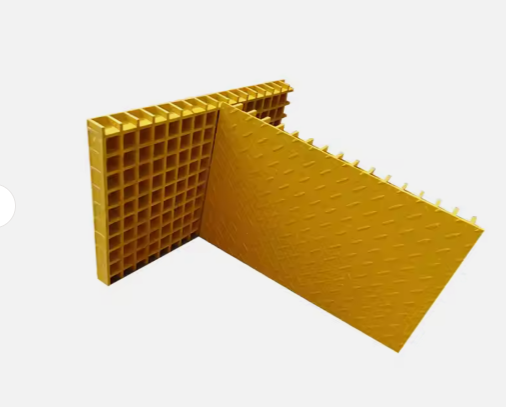
When discussing Phenolic FRP grating, it’s tempting to focus entirely on resin and fibers. But geometry plays a major role in performance. Openings reduce weight and facilitate drainage, while the spacing and cross-member arrangement help distribute loads. In my experience, this is where designers can extract the best value: an engineered panel layout can improve how the grating responds to point loading, reduce flexing, and maintain structural stability across its span.
The grating’s surface pattern also influences user safety. Whether you’re designing for foot traffic, maintenance access, or industrial carts, traction must be reliable even when the walkway is damp. A textured or appropriately patterned surface can reduce slip risk. Meanwhile, drainage channels and openings help prevent pooling, which in turn reduces the risk of corrosion for nearby metal components and improves overall hygiene.
There’s also a subtle advantage: the geometry helps manage debris. Industrial environments accumulate grit, dust, and occasional fragments from processes. With the right grating design, debris is less likely to blanket the surface and create a slick or uneven walking plane. So when people ask what Phenolic FRP grating “does,” the answer includes how it manages water, debris, and load distribution.
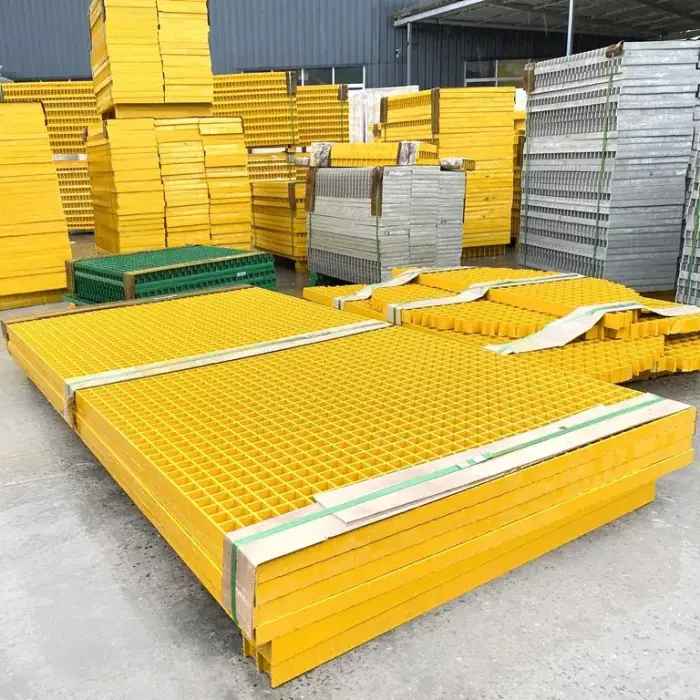
Maintenance mindset: predictable lifecycle and reduced interventions
Maintenance teams often measure success with a simple question: “How often do we touch it?” Phenolic FRP grating can reduce interventions because its corrosion resistance and material stability limit the deterioration pathways that typically demand patching or replacement. In many organizations, the cost of maintenance is not just labor—it’s downtime. If a grating panel needs replacement frequently, the facility loses operational flexibility.
From a personal viewpoint as a reviewer of materials proposals, I’ve noticed that phenolic composites frequently deliver a better lifecycle story when projects consider total cost of ownership rather than only initial purchasing price. The reason is that corrosion and coating failures on metal surfaces can create repeating cycles: inspect, repair, recoat, and eventually replace. With phenolic fiberglass grating systems, you aim for fewer cycles because the material itself is inherently resistant.
Another maintenance benefit is modularity and planning. Composite grating systems are often installed as panels that can be replaced or handled as units. That means when a section needs attention (from extraordinary impact or localized chemical exposure), you can address a targeted area without scrapping an entire platform. This approach aligns well with modern asset management, where the goal is to minimize downtime and reduce disruption to operations.
Phenolic frp grating
The phrase phenolic frp grating is frequently used to describe phenolic resin-based glass fiber reinforced composite grating. In practice, the spelling variation you may see—such as “FRP” and “frp”—should not confuse the core concept. The essential idea remains the same: phenolic chemistry plus glass reinforcement produces a durable walkway material with strong resistance to many environmental stressors. When I explain this to clients, I emphasize that the real differentiation is not just branding—it’s the resin type, fiber reinforcement, and the manufacturing quality that affects long-term behavior.
In many industrial procurement conversations, buyers want clarity on what the material will do over time. phenolic frp grating is often chosen for environments where moisture and chemical exposure exist simultaneously. This combination can be harsh on metal and can degrade many plastics. Phenolic composites can help bridge the gap between high performance and practical installation. If you’ve ever seen a metal grating fail because corrosion undermines the structure at the edges, you understand why a corrosion-resistant composite alternative becomes attractive.
Another reason the “phenolic frp grating” label matters is that it can indicate a specific resin system compared with other composite grating categories. That’s where specification becomes critical. Procurement teams should verify resin composition, fiber quality, thickness, surface treatment, and load ratings with credible documentation. My recommendation is to ask for installation guidance and finish details as well, because small design choices—like frame compatibility and fastener selection—can affect how the grating performs in real settings.
Typical applications where it is chosen
One of the most practical insights is recognizing the environments where phenolic frp grating “fits naturally.” Industrial users often select it for walkways near chemical processes, areas exposed to washdowns, and places where corrosive residues may collect. Because the material can resist degradation from many chemical environments, it can be safer and more stable than alternatives in those zones.
Water-related facilities also benefit because composite grating can handle wet conditions with less concern about rust and pitting. In drainage-forward layouts, grating’s open structure supports flow-through and reduces standing water. This is not only a comfort factor for workers; it also reduces the conditions that contribute to biofilm growth and slip hazards.
Lastly, outdoor or semi-outdoor installations are frequently considered. Temperature fluctuations and rain exposure can stress materials differently. Composite grating designed with phenolic resin aims to stay stable and maintain surface integrity even as conditions change. I’ve found that stakeholders appreciate a material that won’t force constant re-coating or frequent replacement.
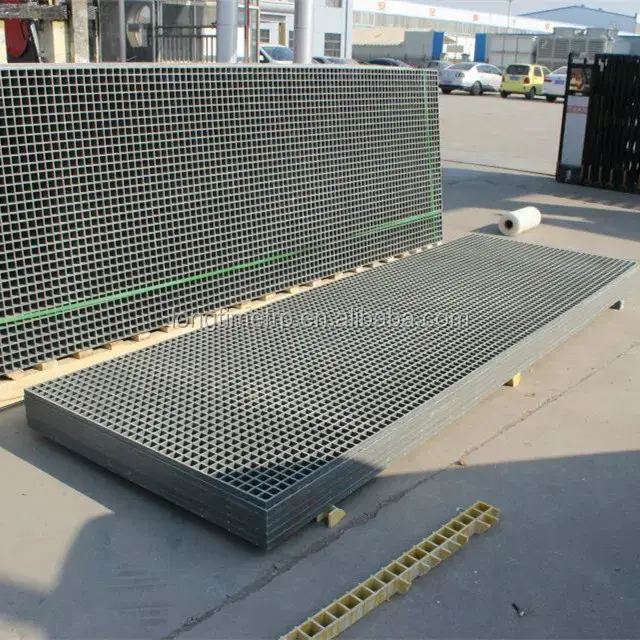
How the surface condition affects safety and durability
Surface condition is a quiet but decisive factor for phenolic frp grating performance. Even if a grating has excellent chemical resistance, if the surface becomes slick due to wear, grime buildup, or uneven texture, it turns into a safety risk. That’s why many grating systems are designed with texture patterns to maintain traction. Good traction matters not only for routine foot traffic but also for maintenance access where workers may be carrying equipment.
Durability isn’t only about “not breaking.” It also includes resistance to surface change over time—like swelling, surface erosion, or loss of texture from abrasive cleaning. Composite grating can be engineered for predictable response to common cleaning practices, but you should still verify cleaning compatibility with the chosen resin and finish.
In my experience, there’s a feedback loop between grating surface and cleaning approach. Facilities that maintain grating regularly tend to preserve traction and appearance. Facilities that delay cleaning can allow residues to accumulate and create slippery conditions. So while phenolic frp grating may be resilient, an effective safety strategy combines good material selection with good cleaning discipline.
Specifying quality: resin content, fiber reinforcement, and panel finishing
When clients ask for phenolic frp grating, I encourage them to think like a materials engineer and a facility manager at the same time. “Quality” has multiple layers: resin composition, fiber reinforcement strategy, manufacturing process control, and finishing details like edge treatment and surface pattern.
Resin content and curing quality influence how the grating responds to exposure. Fiber reinforcement affects strength, stiffness, and how the material behaves under load. Meanwhile, panel finishing affects how debris sits on the surface and how water drains through. Even if two products use similar language, differences in manufacturing can lead to different aging results.
Finally, specification should include compatibility with the installation framework. Grating panels are typically installed in frames or supports, and the interface affects stress distribution and long-term performance. Selecting correct fasteners and ensuring proper alignment can prevent stress concentrations that might otherwise lead to early wear. The best way to protect your investment is to specify not just the grating material, but also the installation system as a whole—because grating performs as a system, not as a standalone plank.
Phenolic grp grating
The term phenolic grp grating can sound similar to phenolic FRP, but it points to a common industry shorthand: GRP refers to glass-reinforced plastic. Many people use FRP and GRP interchangeably in conversation, yet the underlying distinction can be about classification, terminology, and sometimes about the resin system and manufacturing standards applied by a producer. When someone searches for phenolic grp grating, they usually want the phenolic-resin benefit combined with a glass reinforced composite grating structure—often for chemical resistance and corrosion-proof walkway needs.
In practical terms, phenolic grp grating emphasizes the same core concept: glass reinforcement + polymer matrix to create a durable, corrosion-resistant grating. What changes can be how the market labels the product. Some regions and procurement documents lean heavily on “GRP” while others use “FRP.” As a result, it’s not enough to rely on terminology alone; you should confirm the resin type and key mechanical properties.
One creative perspective I like to share is that terminology often reflects procurement culture more than chemistry. GRP vs FRP can become a “language barrier” between design engineers, plant managers, and suppliers. The solution is clear: always tie the label to documented test data and resin identification. That way, you can confidently specify the intended material rather than the marketing phrase.
Clarifying what “GRP” means in grating products
GRP stands for glass-reinforced plastic, which broadly describes composite materials where glass fibers reinforce a plastic matrix. With phenolic grp grating, the matrix is phenolic-based, producing a composite designed for structural and environmental resilience. This is why the phenolic element remains central: it’s the chemical identity that influences resistance to certain harsh conditions.
However, in real procurement, “GRP grating” can sometimes refer to different resin families depending on the manufacturer. That’s why you should ask: what resin is used? Is it truly phenolic, and how is it formulated? Does the product meet the expected mechanical performance? These questions matter because GRP is a category label, not an assurance of resin chemistry by itself.
When these clarifications are addressed early, it reduces disputes later—especially when the grating is used in splash zones, chemical exposure lines, or environments with frequent cleaning cycles. In short, phenolic grp grating should be treated as a specific resin-identified composite system, not only a generic glass-reinforced label.
Benefits that users typically notice during operation
Operationally, users of phenolic grp grating often notice improvements that go beyond chemical resistance. For example, composite grating can reduce the “cold feel” and harsh corrosion-related issues that come with metal. In cold or damp climates, worker comfort and safety can indirectly improve when materials maintain stable surface condition without constant repair.
The open architecture of grating systems often improves drainage and reduces downtime from standing water or debris accumulation. That can be especially valuable in areas where washdown water is part of daily routines. Composite grating can support these processes without the rust-related consequences that can degrade metal in those same areas.
Another noticeable benefit is the reduced need for recoating. With metal grating, protective coatings require ongoing attention. With phenolic composite systems, the aim is to reduce the “maintenance tax” associated with coating cycles. I often think of this as converting maintenance from reactive patching into planned inspection and targeted replacement.
The role of installation details in long-term performance
Even high-quality phenolic grp grating can underperform if installation is sloppy. Composite grating is installed on supports and frames, and stress distribution at the edges or at attachment points matters. If panels are not supported correctly or if improper fasteners create point stresses, you can trigger premature wear.
Installation also includes alignment and clearance. Grating must fit into frames so it can drain correctly and remain stable under load. If water pools at the interface because of poor design, it could create localized conditions that accelerate aging. While composite materials are generally more resistant to corrosion, good design still ensures water management remains effective.
Finally, maintenance teams should understand the grating’s expected cleaning methods. The best results come when cleaning agents and techniques match the material’s properties. If abrasive or chemically incompatible cleaners are used frequently, even robust composites can show surface change faster than anticipated. Therefore, installation quality and maintenance compatibility together define the true lifecycle of phenolic grp grating.
Phenolic fiberglass grating
Phenolic fiberglass grating is a phrase that often appears in product descriptions and procurement requests. It highlights two important elements: phenolic resin chemistry and fiberglass reinforcement. While “FRP” and “GRP” are broader composite labels, “fiberglass” and “phenolic” make the reinforcement and matrix more explicit—useful for buyers who want to verify that the product meets the intended material strategy.
What I find compelling about phenolic fiberglass grating is how it addresses the everyday frustrations of industrial flooring. Workers want surfaces that are stable, safe, and easy to traverse. Maintenance teams want a walkway that doesn’t rust, doesn’t delaminate under routine conditions, and stays in service without excessive interventions. Phenolic fiberglass composites aim to satisfy all three: stability, chemical resistance, and long-term durability.
Another practical insight: phenolic fiberglass grating can support a wide range of layout designs because it comes in standardized panel sizes and can often be cut or fitted to specific spans. This flexibility helps reduce construction complexity. In renovation projects, for example, you might replace corroded metal grating without rebuilding entire supports—depending on engineering approvals and load requirements.
Why fiberglass reinforcement matters for strength
Fiberglass reinforcement plays a central role in how phenolic fiberglass grating carries loads. Glass fibers provide tensile strength and help the composite resist bending and deformation under foot traffic or equipment load. The reinforcement architecture—fiber type, orientation, and volume—affects stiffness and impact resistance.
From an engineering standpoint, the composite must handle both static and dynamic loads. Static loads include weight from people and equipment, while dynamic loads include movement, occasional impacts, and vibration. Glass reinforcement helps the material distribute stresses through the panel rather than concentrating them at one point.
This matters because grating experiences repeated loading cycles. Even when loads are within design limits, fatigue behavior influences long-term integrity. A well-engineered composite grating system uses fiberglass reinforcement to maintain structural performance over time. When teams specify phenolic fiberglass grating, they typically expect stiffness and resilience—not just corrosion resistance. Reinforcement is the “skeleton” that makes those expectations realistic.
Chemical and moisture resilience in daily industrial use
One of the biggest reasons people choose phenolic-based composite grating is the chemical and moisture environment. In facilities with washdowns, splash zones, or chemical handling areas, the walkway becomes a permanent “contact surface.” Phenolic fiberglass grating is often chosen because the phenolic resin provides strong resistance to many corrosive exposures, helping prevent the typical degradation patterns seen in metals.
Moisture resilience is particularly important for slip safety and hygiene. Standing water can create slippery conditions and contribute to contamination. Grating’s open design helps drainage. Meanwhile, the phenolic fiberglass composite aims to remain stable so that the surface doesn’t become a maintenance problem.
A personal observation: many clients underestimate how quickly a walkway becomes part of the chemical exposure system. You see this when a grating that looked fine during installation later shows staining or accelerated degradation due to repetitive chemical contact. Phenolic fiberglass grating is chosen to withstand that repeating “contact reality,” not just occasional exposure.
Handling, cutting, and installation considerations
Even though composite grating is durable, installation and handling still influence performance. Phenolic fiberglass grating must be cut, fitted, and supported correctly according to engineering guidance. If panels are mishandled before installation—such as by forcing them into frames that don’t match—the material can experience stress that may later lead to edge damage.
Cutting must be done with appropriate tools and protective practices to avoid creating rough edges that can snag footwear or collect debris. Edge finishing strategies also matter. Good edge treatment helps maintain appearance and reduces the chance of localized wear.
Finally, installation includes attention to how the grating connects to supporting steel or composite frames. The interface can affect drainage, thermal expansion behavior, and mechanical stress distribution. When those details are planned properly, phenolic fiberglass grating can deliver the promised lifecycle improvements. When they’re ignored, even a good material can be “set up to fail.”
What is frp grating
If you’re new to composite industrial flooring, you may be asking what is frp grating. FRP typically stands for Fiber Reinforced Plastic. In grating, this generally means a composite panel where fibers—often glass—reinforce a plastic resin matrix. The resulting grating functions like a lightweight, corrosion-resistant alternative to metal platforms, ladders, and walkways. Depending on the resin type, FRP grating can be engineered for different performance goals, including chemical resistance, fire behavior, and mechanical stiffness.
The key idea is that FRP grating is not one single product; it’s a family of composite grating solutions. Some FRP products use polyester or vinyl ester resins; others use phenolic resins. That’s why you’ll often see phrases like Phenolic FRP grating or phenolic frp grating in specifications. The resin choice changes what the grating can endure and how it ages under exposure.
A helpful way to think about FRP grating is to treat it as a “designed composite structure.” The openness provides drainage and reduces weight, while the fiber reinforcement supports structural needs. Meanwhile, the resin system provides the environmental defense. When these components are balanced properly, what is frp grating becomes less about an acronym and more about engineered performance.
Core components: resin, fibers, and surface design
To truly understand FRP grating, it helps to break the concept into components. The resin matrix binds fibers and provides resistance to chemicals, moisture, and weathering. The fibers—commonly glass—provide strength and stiffness so the panel can carry loads without excessive flexing.
Surface design also matters. Many grating surfaces are textured or patterned to provide traction. Openings and cross members are arranged to balance drainage, debris handling, and load distribution. If you’ve ever compared smooth plastic panels to textured grating, you know how dramatically traction changes worker confidence. That’s why surface design is not an afterthought.
When the resin and fiber system is paired with the right geometry, you get a composite grating that can function as a long-term walkway solution. That’s why Phenolic FRP grating is considered a specialized kind of FRP grating, where phenolic resin adds particular environmental robustness.
Why people choose FRP grating over metal
People usually choose FRP grating when corrosion, chemical exposure, or high humidity make metal platforms costly to maintain. Metal grating requires coatings, periodic inspection, and frequent repair if corrosion progresses. Even with protective coatings, metal still faces failure modes like coating breakdown, crevice corrosion, and edge corrosion.
FRP grating is attractive because it can reduce corrosion-related downtime. In many facilities, fewer repairs mean fewer shutdowns, lower labor costs, and less exposure risk for maintenance workers. Composite grating can also reduce weight, which simplifies handling during installation and renovation.
However, it’s important to evaluate FRP grating in context. Some FRP solutions may not be suitable for certain high-temperature or chemical scenarios if the resin type is not appropriate. This is why specification should be resin-specific rather than generic. When someone asks what is frp grating, the accurate answer includes “depending on the resin system.” For phenolic applications, phenolic fiberglass grating becomes a focused, high-performance option.
How FRP grating is used in real projects
In real industrial projects, FRP grating is used in walkways, platforms, stairs, pipe supports, and drainage-related surfaces. It’s often selected in areas like chemical processing zones, pump stations, wastewater treatment facilities, and manufacturing plants where washdowns are frequent.
From my observations, the design success of FRP grating often depends on how engineers plan for drainage and debris management. If the grating is installed in a way that traps water beneath the surface, you may not benefit from the composite’s strengths as much. Likewise, if the support framework is not properly aligned, loads can concentrate and reduce effective lifespan.
So, understanding what is frp grating should lead you to consider the full design environment. It’s not only about the panel; it’s about the installation system. When those choices are made thoughtfully, FRP grating can become a reliable, low-maintenance surface that improves safety and reduces operational interruptions.
Difference between frp and grp grating.
The difference between frp and grp grating is often misunderstood because the terms are sometimes used interchangeably. FRP refers to Fiber Reinforced Plastic; GRP refers to Glass Reinforced Plastic. Both describe glass-fiber-reinforced composite materials in many industrial contexts. The “difference” is frequently about terminology and regional standards rather than a fundamentally different product—yet there can be practical differences depending on how manufacturers define materials and which resin systems they use.
The most reliable way to interpret the difference between frp and grp grating is to focus on resin type and reinforcement strategy rather than the acronym. For example, a Phenolic FRP grating and a phenolic grp grating may use phenolic resin matrices, which can mean similar chemical resistance goals. In that case, the “difference” may mostly be labeling rather than substance. But you must confirm details because some “GRP” products may use different resins such as polyester, vinyl ester, or other systems.
In procurement and engineering review, my recommended approach is to compare product data sheets for resin composition, mechanical properties, load rating, and surface specifications. If those match closely, you can treat them as functionally similar. If they don’t, then the acronym is less important than the chemistry.
Terminology vs material chemistry
In everyday conversation, FRP and GRP can blur together. That’s why clients ask about the difference between frp and grp grating—they want to know whether they’re choosing the “right kind” of grating. The truth is that both terms can refer to composite grating systems built with glass reinforcement. The real technical difference is the resin system and manufacturing quality.
For phenolic solutions, the phenolic resin identity is crucial. Phenolic FRP grating and phenolic grp grating can both be phenolic resin-based, leading to similar protective behavior in certain harsh environments. Meanwhile, “GRP” used broadly may also include non-phenolic resins. That’s why you should not treat GRP as a guarantee of phenolic chemistry.
So, terminology is often an entry point. The decisive factor is material chemistry. When you’re evaluating products, always verify the resin type and key performance tests. This turns the difference between frp and grp grating into a practical specification exercise rather than a confusing naming debate.
Practical selection criteria for engineers and procurement teams
To make the selection easier, engineers and procurement teams should evaluate criteria that matter at the job site: chemical resistance requirements, exposure profile, load and deflection behavior, and safety factors. When comparing FRP and GRP, ask whether the composite uses phenolic resin or other resin types. If the facility is exposed to chemicals where phenolic performance is needed, then phenolic variants—like phenolic frp grating or phenolic fiberglass grating—are likely to be more appropriate.
Also consider manufacturing standards and quality assurance. Two grating suppliers might both claim “GRP,” but differences in fiber alignment, curing process, and resin formulation can influence strength and aging. That’s why product documentation matters. You want evidence that the grating meets the required mechanical performance for the span and load conditions.
Finally, consider integration with supporting structures. If a facility already has existing steel frames, the compatibility of the composite with that framework—fasteners, installation method, and water management—becomes part of the selection decision. The best choice is the one that works reliably as a complete system.
How to avoid mis-specification and warranty issues
Mis-specification can happen when people choose products based on acronym alone. For example, if someone selects “GRP” when they actually needed phenolic resin chemistry, the grating may age faster than expected in the target environment. This can lead to early replacement, warranty disputes, and safety concerns. Therefore, the difference between frp and grp grating should be treated as a prompt to verify resin chemistry rather than as a purely semantic distinction.
In my view, the simplest way to prevent issues is to include resin identification and relevant test standards in your specification documents. If the project calls for Phenolic FRP grating, make sure the purchased item is explicitly phenolic-resin-based. If the project calls for phenolic grp grating, again ensure the phenolic resin is stated and supported by documentation.
Also, involve both engineering and maintenance early. Engineering ensures structural fit and performance; maintenance ensures cleaning compatibility and lifecycle expectations. When those teams align, the chance of mis-specification drops dramatically, and the grating performs as intended—without surprises.
Conclusion
In summary, Phenolic FRP grating stands out as a corrosion-resistant, engineered composite walkway solution where resin chemistry, fiber reinforcement, and grating geometry combine to improve safety, drainage, and lifecycle reliability; meanwhile, understanding phenolic frp grating, phenolic grp grating, and phenolic fiberglass grating helps you see how labels map to real material systems. When asking what is frp grating or the difference between frp and grp grating, focus on verified resin type, documented performance, and installation compatibility, because the most important outcomes come from the full system working together rather than from acronyms alone.