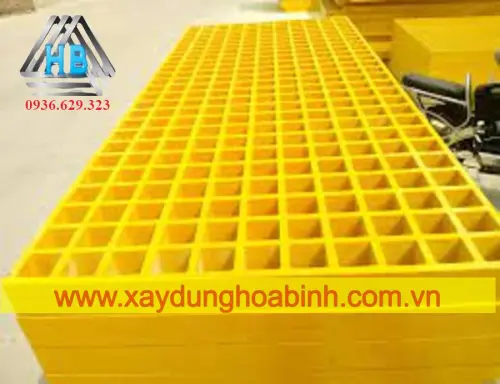


Phenolic FRP Composite Grating, 48.03 × 96.06 × 1.50 in (1220 × 2440 × 38 mm)
Lightweight & High Strength
Phenolic FRP composite grating combines lightweight construction with high structural strength, making it easy to handle, transport, and install while providing reliable load-bearing performance.
Electrical Insulation
As a non-metallic material, FRP grating provides excellent electrical insulation and is suitable for applications where electrical safety is a critical consideration, including high-voltage and electrical equipment areas.
UV Resistance
Designed for demanding environments, FRP composite grating provides excellent resistance to UV exposure and maintains its structural performance and durability under prolonged outdoor and direct sunlight exposure.
Chemical & Corrosion Resistance
Phenolic FRP grating provides excellent resistance to many chemicals and corrosive environments. Unlike conventional steel grating, FRP does not rust or corrode, making it ideal for demanding industrial applications.
High-Temperature Performance
The phenolic resin system provides enhanced resistance to elevated temperatures and makes this type of FRP grating suitable for industrial environments where heat resistance and fire performance are important considerations.
Anti-Slip Surface
The textured anti-slip surface provides excellent traction in wet, oily, and demanding industrial environments, helping improve workplace safety and reduce slip hazards.
Long Service Life
Phenolic FRP composite grating is highly durable and requires minimal maintenance. Its resistance to corrosion, chemicals, moisture, and environmental exposure can help reduce long-term maintenance and replacement costs.
Product Specifications
Product: Phenolic FRP Composite Grating
Material: Fiberglass Reinforced Plastic (FRP) with Phenolic Resin
Panel Size: 48.03 × 96.06 in
Metric Size: 1220 × 2440 mm
Thickness: 1.50 in (38 mm)
Surface: Anti-Slip / Gritted Surface
Electrical Property: Non-Conductive / Electrically Insulating
Applications: Industrial and Commercial Flooring
Ideal Applications
Phenolic FRP composite grating is designed for demanding environments where chemical resistance, corrosion resistance, electrical insulation, high-temperature performance, and long-term durability are required.
Typical applications include:
- Chemical plants
- Petrochemical facilities
- Oil and gas facilities
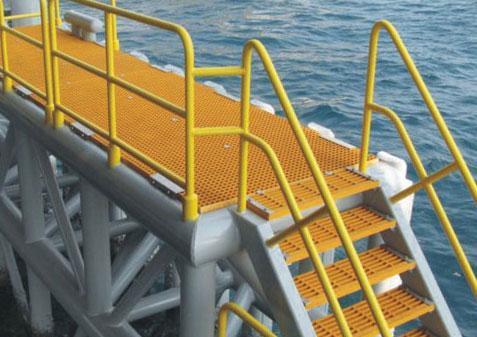
- Offshore platforms
- Power plants
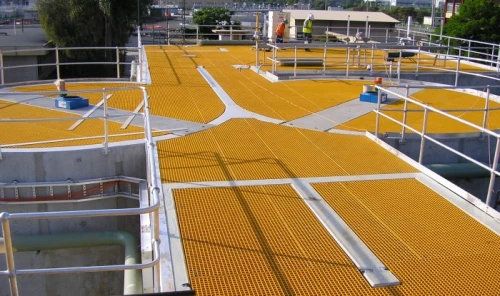
- Wastewater treatment plants
- Industrial manufacturing facilities
- Marine vessels
- Coastal facilities
- Docks and marinas
- Industrial walkways
- Platforms and access areas
- Stair treads
- Maintenance platforms
Why Choose Phenolic FRP Grating?
Compared with conventional metal grating, Phenolic FRP composite grating offers a combination of lightweight construction, high strength, chemical resistance, corrosion resistance, electrical insulation, anti-slip performance, and long service life.
The 48.03 × 96.06 × 1.50-inch (1220 × 2440 × 38 mm) panel is an excellent solution for industrial flooring and access applications where durability, safety, and resistance to harsh environments are essential.
Hoa Binh Group supplies high-performance FRP composite grating solutions for industrial, marine, offshore, chemical, energy, and infrastructure applications.
What Is Grating? An In-Depth Guide to FRP Grating Structure, Benefits, and Applications
To fully understand the advantages of FRP (Fiberglass Reinforced Plastic) composite grating, it is important to first understand what grating is and how it works.
In technical terms, grating, also known as mesh flooring or open-grid flooring, is a structural flooring system made of parallel or intersecting load-bearing bars. These bars are connected at regular intervals to form an open-grid pattern.
Depending on the application, grating can be manufactured from carbon steel, stainless steel, aluminum, fiberglass reinforced plastic (FRP), and other engineered materials.
Key Benefits of Grating
The open-grid design provides several important advantages for industrial and commercial applications:
Lightweight Construction
The open-grid structure significantly reduces the overall weight of the flooring compared with solid flooring systems while maintaining excellent load-bearing performance. This makes grating easier to transport, handle, and install.
Excellent Ventilation and Drainage
The open-grid design allows air to circulate freely and enables water, oil, chemicals, and other liquids to drain quickly. This helps prevent liquid buildup, surface contamination, corrosion, and slip hazards.
High Load-Bearing Capacity
Properly engineered grating can withstand substantial static and dynamic loads, making it suitable for industrial walkways, platforms, mezzanines, equipment access areas, stairways, and other high-traffic environments.
Fast Installation and Easy Maintenance
Grating panels can be installed on structural support frames using mechanical fastening systems. The modular design allows for quick installation, easy removal, and convenient access to equipment and underlying structures for inspection and maintenance.
Enhanced Workplace Safety
Many grating systems are manufactured with anti-slip surfaces to improve traction in wet, oily, or chemically contaminated environments. This helps create a safer working environment for personnel.
FRP Composite Grating: A High-Performance Alternative to Metal Grating
Among modern industrial flooring materials, FRP grating has become a high-performance alternative to traditional metal grating.
FRP stands for Fiberglass Reinforced Plastic. It is a composite material consisting of a polymer resin matrix reinforced with high-strength fiberglass.
Common resin systems include:
Polyester resin
Vinyl ester resin
Epoxy resin
Phenolic resin
The combination of fiberglass reinforcement and polymer resin creates a material with an excellent strength-to-weight ratio, corrosion resistance, chemical resistance, and long service life.
Unlike conventional steel grating, FRP grating does not rust or corrode and is naturally non-conductive, making it particularly suitable for harsh industrial environments.
Types of FRP Grating
FRP grating is primarily manufactured using two major production methods: molded FRP grating and pultruded FRP grating.
1. Molded FRP Grating
Molded FRP grating is manufactured by combining continuous fiberglass reinforcement with resin inside a mold. The resin and fiberglass are integrated into a one-piece, monolithic panel.
This manufacturing process provides excellent bi-directional load distribution, allowing the panel to handle loads in multiple directions.
Molded FRP grating is commonly used for:
Industrial walkways
Platforms
Stair treads
Chemical plants
Water and wastewater treatment facilities
Food processing facilities
Offshore applications
2. Pultruded FRP Grating
Pultruded FRP grating is manufactured by pulling continuous fiberglass strands through a resin bath and then through a heated forming die.
This process produces high-strength structural bars with a greater concentration of fiberglass in the load-bearing direction.
Pultruded FRP grating is particularly suitable for applications requiring high longitudinal load-bearing capacity and long spans.
FRP Grating Panel Specifications
Our FRP grating panel, 48.03 x 96.06 x 0.79 inches (1220 x 2440 x 20 mm), belongs to the molded FRP grating category.
This panel provides an effective balance between structural performance, corrosion resistance, durability, ease of installation, and cost efficiency.
Custom panel sizes and thicknesses can also be manufactured according to project requirements.
Key Technical Advantages of FRP Grating
1. Superior Chemical and Corrosion Resistance
One of the most important advantages of FRP grating is its resistance to aggressive chemicals.
Depending on the resin system selected, FRP grating can resist exposure to:
Acids
Alkalis
Salts
Oils
Solvents
Industrial chemicals
Wastewater
This makes FRP grating an excellent choice for chemical processing plants, wastewater treatment facilities, petrochemical facilities, and other corrosive environments.
2. Rust-Free and Corrosion Resistant
Unlike carbon steel and galvanized steel, FRP does not oxidize or develop conventional rust.
It can perform reliably in environments exposed to:
Moisture
Saltwater
High humidity
Chemicals
Wastewater
Marine conditions
This significantly reduces maintenance requirements and can extend the service life of the flooring system.
3. Non-Conductive and Electrically Insulating
FRP is a non-metallic material and does not conduct electricity like conventional metal grating.
This makes non-conductive FRP grating particularly useful around:
Electrical substations
Power plants
Switchgear rooms
Electrical equipment
High-voltage areas
FRP can provide an additional level of electrical safety where conductive metal flooring may present a concern.
4. Excellent Slip Resistance
FRP grating is available with different surface configurations, including:
Concave surfaces
Gritted surfaces
Grit-top surfaces
Textured surfaces
These options provide improved traction in wet, oily, or slippery industrial environments.
5. Fire-Retardant Options
FRP grating can be manufactured with specialized resin formulations and additives designed to provide enhanced flame resistance and fire-retardant performance.
For applications with strict fire-safety requirements, the appropriate resin system and product specifications should be selected according to the applicable project standards and regulations.
6. Long Service Life
When properly designed, manufactured, installed, and maintained, FRP grating can provide decades of service in demanding environments.
Its resistance to corrosion, chemicals, moisture, and environmental exposure can significantly reduce replacement and maintenance costs compared with conventional metal flooring in many applications.
FRP Grating Applications
The 48.03 x 96.06 x 0.79-inch (1220 x 2440 x 20 mm) FRP grating panel is a versatile industrial flooring solution suitable for a wide range of applications.
1. Heavy Industry
Chemical and Petrochemical Plants
FRP grating can be used for platforms, walkways, maintenance areas, and access platforms exposed to aggressive chemicals and corrosive substances.
Power Plants
Non-conductive FRP grating is suitable for electrical areas, substations, equipment platforms, and maintenance walkways where electrical insulation is an important consideration.
Food and Beverage Processing
FRP grating provides a durable and easy-to-clean flooring solution that can withstand moisture, cleaning chemicals, and many food-processing environments.
2. Livestock and Agricultural Facilities
Animal Housing
FRP grating is suitable for livestock facilities because of its corrosion resistance, drainage capability, lightweight construction, and ease of cleaning.
It can be used in:
Poultry farms
Swine farms
Livestock facilities
Animal processing areas
Agricultural drainage systems
The open-grid design allows liquids and waste to drain efficiently, helping maintain a cleaner and drier working environment.
3. Marine and Infrastructure Applications
Offshore Platforms and Marine Facilities
FRP grating is well suited for marine environments because it does not rust and provides excellent resistance to saltwater and moisture.
Typical applications include:
Offshore platforms
Marine terminals
Docks
Piers
Shipyards
Coastal facilities
Marine walkways
The anti-slip surface also helps improve worker safety in wet marine environments.
Public Infrastructure
FRP grating can be used for:
Walkways
Stair treads
Drainage covers
Trench covers
Utility access platforms
Pedestrian bridges
Maintenance platforms
Its lightweight construction can simplify transportation and installation while reducing long-term maintenance requirements.
FRP Grating Installation and Maintenance Guidelines
Proper installation is essential to maximize the performance and service life of FRP grating.
1. Cutting and Preparation
Use appropriate cutting tools, such as diamond-tipped blades or carbide-tipped cutting tools, when cutting FRP panels.
Because cutting FRP can generate fiberglass dust, workers should use appropriate personal protective equipment (PPE), including eye protection, gloves, and respiratory protection when required.
2. Structural Support
Install FRP grating panels on a properly designed support structure made from suitable materials such as:
Structural steel
Stainless steel
Concrete
FRP structural members
Support spacing should be designed according to the panel thickness, load requirements, span, and applicable engineering specifications.
3. Mechanical Fastening
Secure FRP panels using appropriate mechanical fastening systems.
Common FRP grating fastening options include:
M-clips
L-clips
C-clips
Stainless steel hold-down clips
For corrosive environments, 304 or 316 stainless steel hardware may be selected depending on the application and environmental conditions.
4. Cleaning and Maintenance
FRP grating generally requires minimal maintenance.
Routine maintenance typically includes:
Cleaning with water
Using mild detergents when necessary
Removing accumulated dirt and debris
Inspecting fastening points
Checking support structures
Inspecting the grating for physical damage
Regular inspection helps maintain structural integrity and workplace safety.
Why Choose FRP Composite Grating?
FRP composite grating combines lightweight construction, corrosion resistance, chemical resistance, electrical insulation, slip resistance, and long-term durability.
Compared with conventional metal grating, FRP can provide significant advantages in environments where corrosion, moisture, chemicals, electrical conductivity, or frequent maintenance are major concerns.
For industrial facilities operating in harsh environments, FRP grating can provide a reliable and cost-effective alternative to traditional metal flooring.
Available FRP Grating Panel Sizes
Our current FRP grating panel options include:
FRP Grating Panel: 48.03 x 161.81 x 0.79 inches (1220 x 4110 x 20 mm)
FRP Grating Panel: 48.03 x 161.81 x 0.98 inches (1220 x 4110 x 25 mm)
FRP Grating Panel: 48.03 x 161.81 x 1.50 inches (1220 x 4110 x 38 mm)
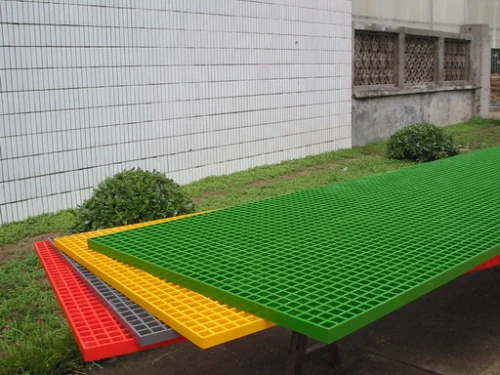
Custom thicknesses, panel dimensions, surface finishes, colors, and load capacities are available upon request, subject to project requirements.
Conclusion
FRP composite grating represents a major advancement in industrial flooring technology.
By combining high strength, lightweight construction, corrosion resistance, chemical resistance, electrical insulation, slip resistance, and long service life, FRP grating is an excellent solution for demanding industrial and infrastructure applications.
From chemical plants and wastewater treatment facilities to power plants, offshore platforms, food-processing facilities, and agricultural operations, FRP grating provides a durable, low-maintenance, and high-performance flooring solution.
For high-performance FRP grating solutions designed for demanding environments, Hoa Binh Construction provides engineered composite products for industrial flooring, walkways, platforms, stair treads, trench covers, and other infrastructure applications.
Hoa Binh Group
Specializing in the nationwide production of COMPOSITE GRATING FLOORS – COMPOSITE MANHOLE COVERS – COMPOSITE DRAINAGE GRATES.
Địa chỉ: No. 69 Tan Lap, Dong Hoa Ward, Ho Chi Minh City, Vietnam
Hotline: +84 936629323
Email: Sale.export@globalfrpmanufacturer.comdựa vào bài viết sau sửa đổi thông tin chuẩn kích thước Mỹ 1220x2440x38 và 1220 x 2440 x 38: What Is Grating? An In-Depth Guide to FRP Grating Structure, Benefits, and Applications
To fully understand the advantages of FRP (Fiberglass Reinforced Plastic) composite grating, it is important to first understand what grating is and how it works.
In technical terms, grating, also known as mesh flooring or open-grid flooring, is a structural flooring system made of parallel or intersecting load-bearing bars. These bars are connected at regular intervals to form an open-grid pattern.
Depending on the application, grating can be manufactured from carbon steel, stainless steel, aluminum, fiberglass reinforced plastic (FRP), and other engineered materials.
Key Benefits of Grating
The open-grid design provides several important advantages for industrial and commercial applications:
Lightweight Construction
The open-grid structure significantly reduces the overall weight of the flooring compared with solid flooring systems while maintaining excellent load-bearing performance. This makes grating easier to transport, handle, and install.
Excellent Ventilation and Drainage
The open-grid design allows air to circulate freely and enables water, oil, chemicals, and other liquids to drain quickly. This helps prevent liquid buildup, surface contamination, corrosion, and slip hazards.
High Load-Bearing Capacity
Properly engineered grating can withstand substantial static and dynamic loads, making it suitable for industrial walkways, platforms, mezzanines, equipment access areas, stairways, and other high-traffic environments.
Fast Installation and Easy Maintenance
Grating panels can be installed on structural support frames using mechanical fastening systems. The modular design allows for quick installation, easy removal, and convenient access to equipment and underlying structures for inspection and maintenance.
Enhanced Workplace Safety
Many grating systems are manufactured with anti-slip surfaces to improve traction in wet, oily, or chemically contaminated environments. This helps create a safer working environment for personnel.
FRP Composite Grating: A High-Performance Alternative to Metal Grating
Among modern industrial flooring materials, FRP grating has become a high-performance alternative to traditional metal grating.
FRP stands for Fiberglass Reinforced Plastic. It is a composite material consisting of a polymer resin matrix reinforced with high-strength fiberglass.
Common resin systems include:
Polyester resin
Vinyl ester resin
Epoxy resin
Phenolic resin
The combination of fiberglass reinforcement and polymer resin creates a material with an excellent strength-to-weight ratio, corrosion resistance, chemical resistance, and long service life.
Unlike conventional steel grating, FRP grating does not rust or corrode and is naturally non-conductive, making it particularly suitable for harsh industrial environments.
Types of FRP Grating
FRP grating is primarily manufactured using two major production methods: molded FRP grating and pultruded FRP grating.
1. Molded FRP Grating
Molded FRP grating is manufactured by combining continuous fiberglass reinforcement with resin inside a mold. The resin and fiberglass are integrated into a one-piece, monolithic panel.
This manufacturing process provides excellent bi-directional load distribution, allowing the panel to handle loads in multiple directions.
Molded FRP grating is commonly used for:
Industrial walkways
Platforms
Stair treads
Chemical plants
Water and wastewater treatment facilities
Food processing facilities
Offshore applications
2. Pultruded FRP Grating
Pultruded FRP grating is manufactured by pulling continuous fiberglass strands through a resin bath and then through a heated forming die.
This process produces high-strength structural bars with a greater concentration of fiberglass in the load-bearing direction.
Pultruded FRP grating is particularly suitable for applications requiring high longitudinal load-bearing capacity and long spans.
FRP Grating Panel Specifications
Our FRP grating panel, 48.03 x 96.06 x 0.79 inches (1220 x 2440 x 20 mm), belongs to the molded FRP grating category.
This panel provides an effective balance between structural performance, corrosion resistance, durability, ease of installation, and cost efficiency.
Custom panel sizes and thicknesses can also be manufactured according to project requirements.
Key Technical Advantages of FRP Grating
1. Superior Chemical and Corrosion Resistance
One of the most important advantages of FRP grating is its resistance to aggressive chemicals.
Depending on the resin system selected, FRP grating can resist exposure to:
Acids
Alkalis
Salts
Oils
Solvents
Industrial chemicals
Wastewater
This makes FRP grating an excellent choice for chemical processing plants, wastewater treatment facilities, petrochemical facilities, and other corrosive environments.
2. Rust-Free and Corrosion Resistant
Unlike carbon steel and galvanized steel, FRP does not oxidize or develop conventional rust.
It can perform reliably in environments exposed to:
Moisture
Saltwater
High humidity
Chemicals
Wastewater
Marine conditions
This significantly reduces maintenance requirements and can extend the service life of the flooring system.
3. Non-Conductive and Electrically Insulating
FRP is a non-metallic material and does not conduct electricity like conventional metal grating.
This makes non-conductive FRP grating particularly useful around:
Electrical substations
Power plants
Switchgear rooms
Electrical equipment
High-voltage areas
FRP can provide an additional level of electrical safety where conductive metal flooring may present a concern.
4. Excellent Slip Resistance
FRP grating is available with different surface configurations, including:
Concave surfaces
Gritted surfaces
Grit-top surfaces
Textured surfaces
These options provide improved traction in wet, oily, or slippery industrial environments.
5. Fire-Retardant Options
FRP grating can be manufactured with specialized resin formulations and additives designed to provide enhanced flame resistance and fire-retardant performance.
For applications with strict fire-safety requirements, the appropriate resin system and product specifications should be selected according to the applicable project standards and regulations.
6. Long Service Life
When properly designed, manufactured, installed, and maintained, FRP grating can provide decades of service in demanding environments.
Its resistance to corrosion, chemicals, moisture, and environmental exposure can significantly reduce replacement and maintenance costs compared with conventional metal flooring in many applications.
FRP Grating Applications
The 48.03 x 96.06 x 0.79-inch (1220 x 2440 x 20 mm) FRP grating panel is a versatile industrial flooring solution suitable for a wide range of applications.
1. Heavy Industry
Chemical and Petrochemical Plants
FRP grating can be used for platforms, walkways, maintenance areas, and access platforms exposed to aggressive chemicals and corrosive substances.
Power Plants
Non-conductive FRP grating is suitable for electrical areas, substations, equipment platforms, and maintenance walkways where electrical insulation is an important consideration.
Food and Beverage Processing
FRP grating provides a durable and easy-to-clean flooring solution that can withstand moisture, cleaning chemicals, and many food-processing environments.
2. Livestock and Agricultural Facilities
Animal Housing
FRP grating is suitable for livestock facilities because of its corrosion resistance, drainage capability, lightweight construction, and ease of cleaning.
It can be used in:
Poultry farms
Swine farms
Livestock facilities
Animal processing areas
Agricultural drainage systems
The open-grid design allows liquids and waste to drain efficiently, helping maintain a cleaner and drier working environment.
3. Marine and Infrastructure Applications
Offshore Platforms and Marine Facilities
FRP grating is well suited for marine environments because it does not rust and provides excellent resistance to saltwater and moisture.
Typical applications include:
Offshore platforms
Marine terminals
Docks
Piers
Shipyards
Coastal facilities
Marine walkways
The anti-slip surface also helps improve worker safety in wet marine environments.
Public Infrastructure
FRP grating can be used for:
Walkways
Stair treads
Drainage covers
Trench covers
Utility access platforms
Pedestrian bridges
Maintenance platforms
Its lightweight construction can simplify transportation and installation while reducing long-term maintenance requirements.
FRP Grating Installation and Maintenance Guidelines
Proper installation is essential to maximize the performance and service life of FRP grating.
1. Cutting and Preparation
Use appropriate cutting tools, such as diamond-tipped blades or carbide-tipped cutting tools, when cutting FRP panels.
Because cutting FRP can generate fiberglass dust, workers should use appropriate personal protective equipment (PPE), including eye protection, gloves, and respiratory protection when required.
2. Structural Support
Install FRP grating panels on a properly designed support structure made from suitable materials such as:
Structural steel
Stainless steel
Concrete
FRP structural members
Support spacing should be designed according to the panel thickness, load requirements, span, and applicable engineering specifications.
3. Mechanical Fastening
Secure FRP panels using appropriate mechanical fastening systems.
Common FRP grating fastening options include:
M-clips
L-clips
C-clips
Stainless steel hold-down clips
For corrosive environments, 304 or 316 stainless steel hardware may be selected depending on the application and environmental conditions.
4. Cleaning and Maintenance
FRP grating generally requires minimal maintenance.
Routine maintenance typically includes:
Cleaning with water
Using mild detergents when necessary
Removing accumulated dirt and debris
Inspecting fastening points
Checking support structures
Inspecting the grating for physical damage
Regular inspection helps maintain structural integrity and workplace safety.
Why Choose FRP Composite Grating?
FRP composite grating combines lightweight construction, corrosion resistance, chemical resistance, electrical insulation, slip resistance, and long-term durability.
Compared with conventional metal grating, FRP can provide significant advantages in environments where corrosion, moisture, chemicals, electrical conductivity, or frequent maintenance are major concerns.
For industrial facilities operating in harsh environments, FRP grating can provide a reliable and cost-effective alternative to traditional metal flooring.
Available FRP Grating Panel Sizes
Our current FRP grating panel options include:
FRP Grating Panel: 48.03 x 161.81 x 0.79 inches (1220 x 4110 x 20 mm)
FRP Grating Panel: 48.03 x 161.81 x 0.98 inches (1220 x 4110 x 25 mm)
FRP Grating Panel: 48.03 x 161.81 x 1.50 inches (1220 x 4110 x 38 mm)
Custom thicknesses, panel dimensions, surface finishes, colors, and load capacities are available upon request, subject to project requirements.
Conclusion
FRP composite grating represents a major advancement in industrial flooring technology.
By combining high strength, lightweight construction, corrosion resistance, chemical resistance, electrical insulation, slip resistance, and long service life, FRP grating is an excellent solution for demanding industrial and infrastructure applications.
From chemical plants and wastewater treatment facilities to power plants, offshore platforms, food-processing facilities, and agricultural operations, FRP grating provides a durable, low-maintenance, and high-performance flooring solution.
For high-performance FRP grating solutions designed for demanding environments, Hoa Binh Construction provides engineered composite products for industrial flooring, walkways, platforms, stair treads, trench covers, and other infrastructure applications.
Hoa Binh Group
Specializing in the nationwide production of COMPOSITE GRATING FLOORS – COMPOSITE MANHOLE COVERS – COMPOSITE DRAINAGE GRATES.
- Địa chỉ: No. 69 Tan Lap, Dong Hoa Ward, Ho Chi Minh City, Vietnam
- Hotline: +84 936629323
- Email: Sale.export@globalfrpmanufacturer.com