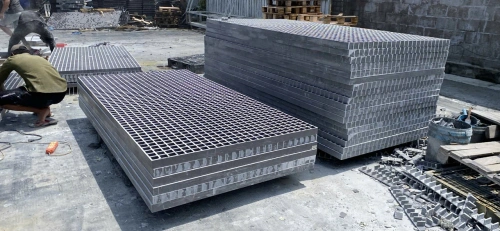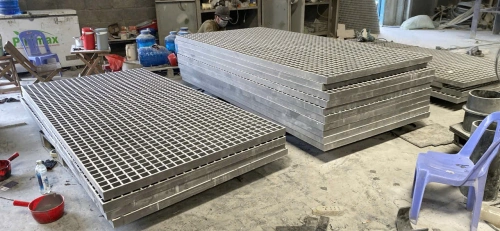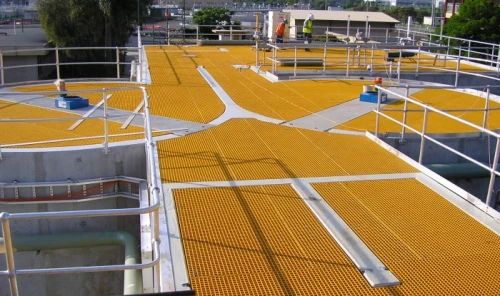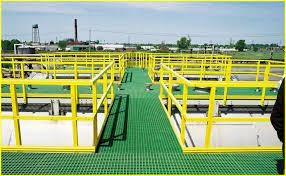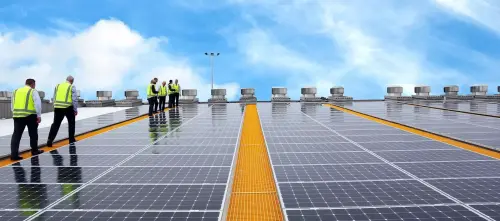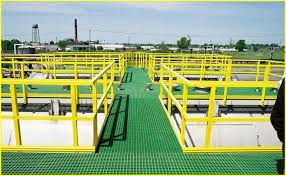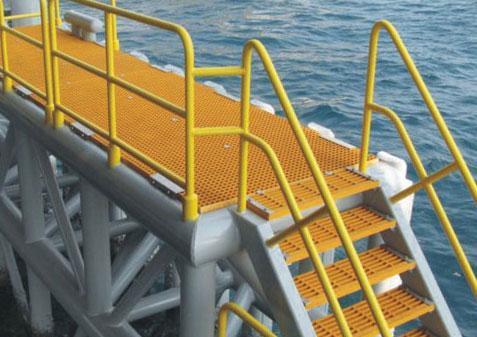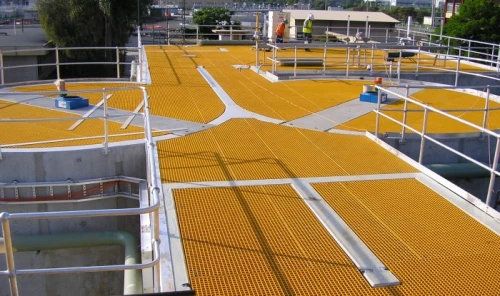


FRP Grating Panels
Comparison Between Hoa Binh Composite Grating and Galvanized Steel Grating
I. Introduction
Grating flooring is a widely used construction material across various industries, ranging from civil construction to heavy industrial applications. Among the many types of grating systems available on the market, composite grating and galvanized steel grating are two of the most popular options.
This article focuses on comparing the advantages of Hoa Binh Composite Grating with galvanized steel grating, helping customers and contractors gain a comprehensive understanding in order to select the most suitable solution for their projects.
II. Hoa Binh Composite Grating
1. Definition and Structure
Composite grating is manufactured from composite materials, typically combining fiberglass reinforcement with polyester or epoxy resin. This advanced material has become increasingly popular due to its outstanding durability, corrosion resistance, and aesthetic appearance.
2. Advantages of Hoa Binh Composite Grating
a. High Strength and Long Service Life
Composite grating offers exceptional strength and durability, capable of withstanding heavy impacts without deformation. The combination of fiberglass and resin provides superior mechanical performance compared to galvanized steel grating.
b. Excellent Corrosion and Chemical Resistance
One of the greatest advantages of composite grating is its excellent resistance to corrosion and chemicals. In industrial environments where exposure to corrosive substances is common, composite grating significantly outperforms galvanized steel grating, which may corrode over time despite its zinc coating.
c. Lightweight Structure
Composite grating is considerably lighter than galvanized steel grating. This feature facilitates transportation and installation while reducing the load imposed on structural systems, especially in projects with strict weight limitations.
d. Safety and Electrical Insulation
Composite grating is non-conductive, making it highly suitable for environments with explosion risks or stringent electrical safety requirements. In addition, its anti-slip surface provides enhanced worker safety by minimizing the risk of accidents.
e. Easy Installation and Low Maintenance
Thanks to its lightweight design and excellent load-bearing capability, composite grating is easy to install and maintain. Since it does not require galvanizing or additional coating, long-term maintenance costs are significantly reduced.
III. Galvanized Steel Grating
1. Definition and Structure
Galvanized steel grating is fabricated from steel and coated with zinc to improve corrosion resistance. It is commonly used in industrial applications due to its high load-bearing capacity and durability.
2. Advantages of Galvanized Steel Grating
a. Excellent Load-Bearing Capacity
Galvanized steel grating provides outstanding load-bearing performance, making it suitable for heavy-duty areas such as factories, warehouses, industrial plants, and transportation infrastructure.
b. Lower Initial Cost
One of the key reasons galvanized steel grating is widely used is its relatively low manufacturing and installation cost compared to composite grating. This makes it an attractive option for projects with limited budgets.
c. Anti-Slip Performance
Galvanized grating can also provide good slip resistance, particularly when designed with serrated or anti-slip surfaces, ensuring user safety.
d. Easy Fabrication
Steel is easy to cut, bend, weld, and fabricate, allowing galvanized grating to be customized according to specific project requirements.
IV. Comparison Between Hoa Binh Composite Grating and Galvanized Steel Grating
1. Durability and Service Life
Although both types of grating offer good durability, Hoa Binh Composite Grating demonstrates superior resistance to mechanical impact and harsh environmental conditions. Galvanized steel grating may corrode over time, especially in chemical environments, whereas composite grating maintains long-term performance and stability.
2. Corrosion Resistance
Hoa Binh Composite Grating clearly outperforms galvanized steel grating in corrosion resistance. Fiberglass and resin are highly resistant to acids, alkalis, and salts, while galvanized steel may still deteriorate after prolonged exposure despite its protective zinc coating.
3. Weight and Installation
Composite grating is significantly lighter than galvanized steel grating. This advantage simplifies transportation and installation while reducing structural loads, especially in renovation projects and elevated structures.
4. Safety
From a safety perspective, composite grating provides superior electrical insulation and better slip resistance, reducing workplace accidents. Galvanized steel grating also offers slip resistance but lacks the non-conductive properties of composite materials.
5. Cost Considerations
Galvanized steel grating generally has a lower initial investment cost, making it suitable for budget-sensitive projects. However, long-term maintenance and replacement costs may increase due to corrosion issues.
In contrast, Hoa Binh Composite Grating requires a higher initial investment but offers lower maintenance costs and a longer service life, resulting in greater long-term economic efficiency.
V. Applications of Hoa Binh Composite Grating and Galvanized Steel Grating
1. Applications of Composite Grating
Hoa Binh Composite Grating is widely used in industries requiring high durability and corrosion resistance, including:
- Chemical plants
- Oil & gas facilities
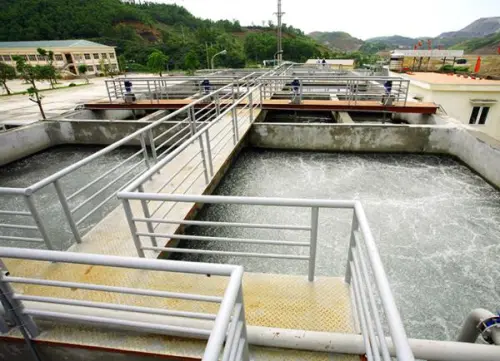
- Wastewater treatment plants
- Coastal and marine environments
- Civil infrastructure projects
- Industrial walkways and platforms
2. Applications of Galvanized Steel Grating
Galvanized steel grating is commonly applied in areas requiring high load capacity, such as:
- Factories and warehouses
- Industrial facilities
- Transportation infrastructure
- Heavy-duty platforms and walkways
Due to its lower cost and strong structural performance, galvanized steel grating remains a popular choice for many industrial projects.
VI. Conclusion
Both Hoa Binh Composite Grating and galvanized steel grating offer unique advantages and are suitable for different project requirements.
Hoa Binh Composite Grating stands out for its:
- High durability
- Superior corrosion resistance
- Lightweight design
- Electrical insulation and safety features
making it an ideal solution for harsh environments and projects with high safety standards.
Meanwhile, galvanized steel grating offers:
- Lower initial investment cost
- Excellent load-bearing capacity
making it suitable for heavy-duty projects with limited budgets.
Ultimately, selecting the appropriate grating system depends on several factors, including environmental conditions, technical requirements, and project budget. Understanding the strengths of each material enables investors and contractors to make informed decisions that ensure both technical performance and long-term economic efficiency.